A practical B2B guide to sourcing crochet lace womenswear at scale, covering craft criteria, QC checkpoints, OEM/ODM workflows and how Eaoy Fashion delivers handmade aesthetics through industrialized production.
Reading the Crochet Lace Opportunity in Womenswear
Crochet lace has quietly moved from a seasonal novelty to a recurring commercial pillar across womenswear ranges in the US and European markets. What used to be a niche resort-wear detail now appears in year-round assortments, from small trims on cotton blouses to full open-work dresses, co-ord sets, cover-ups and knitwear layers. For vertical brand owners, buyers and category managers, the question is no longer whether to stockcrochet lacepieces, but how to source them at a price, quality and lead time that supports repeat programs rather than one-off drops.
This article is written for sourcing teams building crochet-driven capsules or refreshing existing lace programs. It reviews why the category is commercially attractive, the technical criteria that separate a reliable supplier from a risky one, and the practical checklist that keeps a crochet lace order on time, on cost and on brand.
Why Crochet Lace Is a Strategic Category for Brands and Retailers
Crochet-based product carries a strong perceived-value halo. The visual language of loops, open work and hand-formed motifs signals craft, slow fashion and vintage revival, which are all narratives that resonate with Western consumers who are trading up from basics into what looks like considered design. For a vertical brand owner, that translates into three commercial advantages:
– Higher AOV and margin room. Crochet detailing supports a price ladder above plain woven or jersey equivalents, without requiring luxury materials.
– Editorial and PDP appeal. Textured surfaces and cut-out constructions photograph well, improving click-through on marketplaces, DTC storefronts and social channels.
– Trans-seasonal reach. With the right yarn and lining choices, crochet lace works for spring resort, high summer, festival, transitional autumn layers and holiday party dressing.
The catch is on the supply side. Genuine hand crochet is slow, expensive and hard to standardize across a bulk PO. Pure lace substitutes often look flat and lose the handcraft cue that justifies the price. The winning approach for scaled brands is a hybrid one: industrialized processes engineered to reproduce the visual and tactile identity of hand crochet. That is exactly where an experiencedlace and crochet apparel manufacturerearns its place in the supply chain.
Technical and Sourcing Criteria Buyers Should Evaluate
Before issuing an RFQ, sourcing teams should agree internally on what kind of crochet lace program they are buying. The category splits into several distinct construction families, and each has different cost drivers and QC risks.
1. Construction type
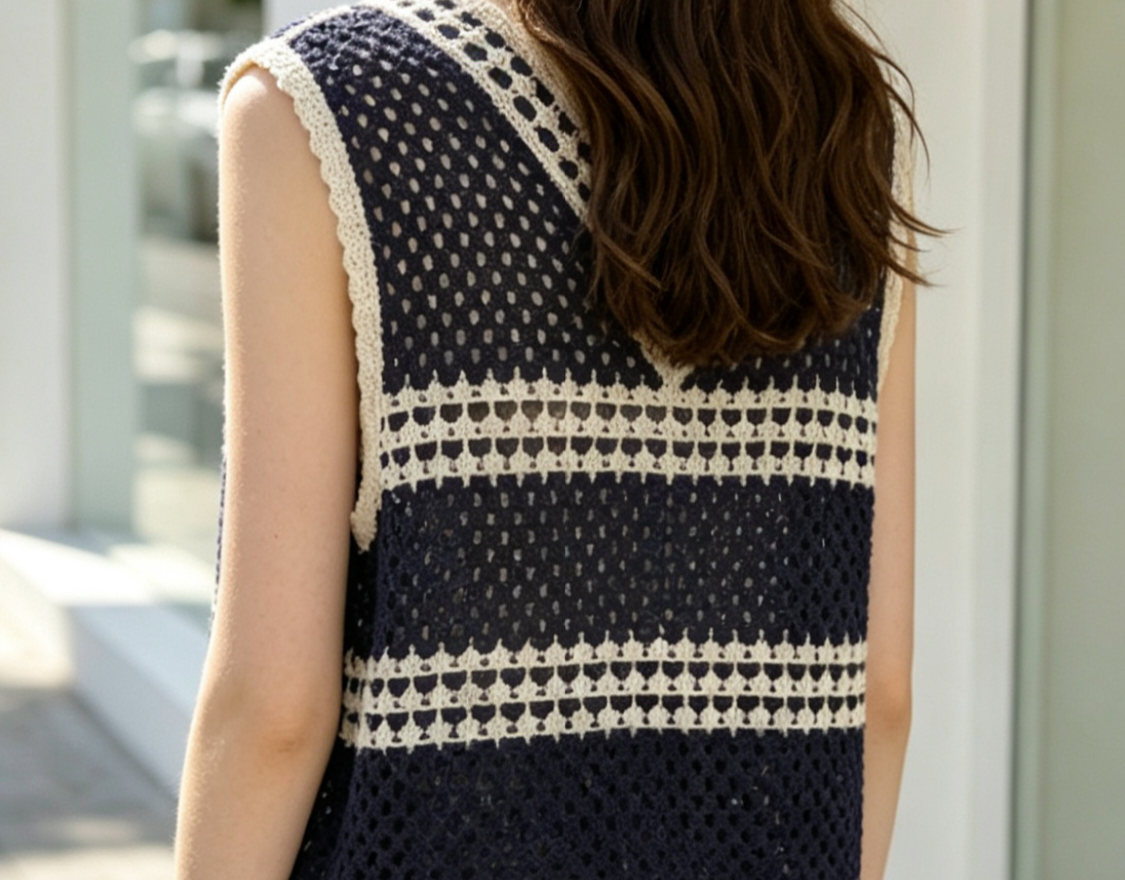
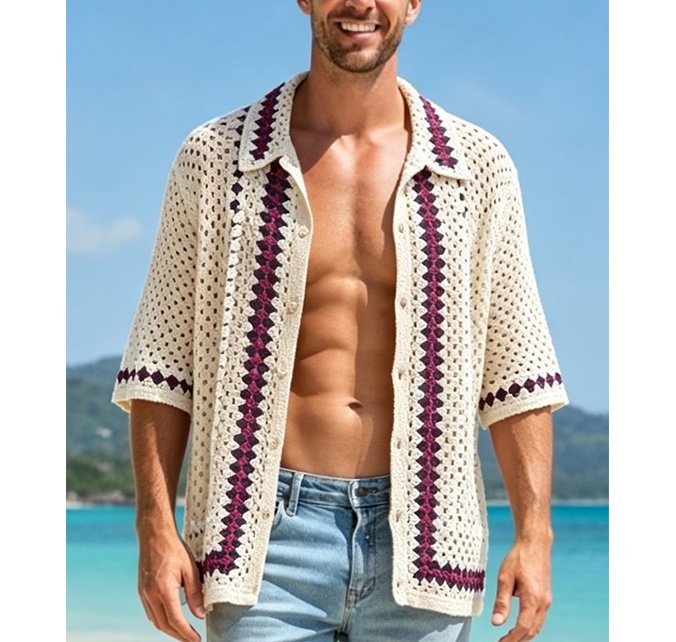
– Imitation crochet knit panels. Built on circular or flat knitting machines with programmed stitch patterns that mimic hand loops. Best for bodices, sleeves, ponchos and full garments.
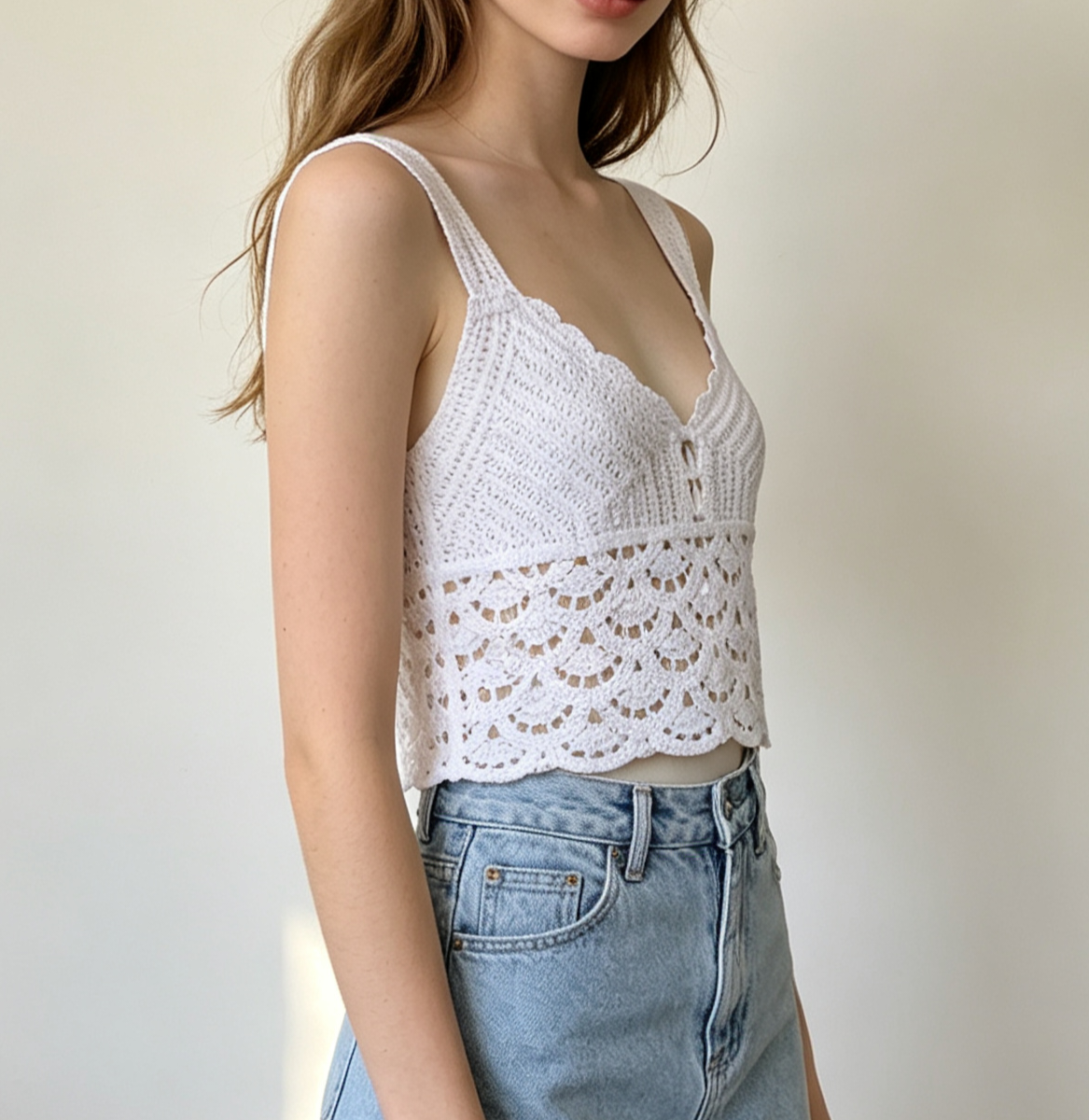
– Computer embroidery on mesh or chemical lace. Motifs are stitched onto a base and, where required, the base is chemically or thermally removed to leave an open-work lace. Ideal for scalloped edges, borders, appliqués and full guipure fabrics.
– Cut-out and insertion designs. Woven or jersey bodies interrupted by lace or crochet inserts at the waist, shoulders, back or hem. Requires careful pattern engineering.
– Trim-level accents. Neckline, cuff and hem trims that lift a basic silhouette to a premium price point at low incremental cost.
2. Yarn and hand feel
Fiber choice drives both cost and consumer perception. Cotton and cotton blends read as natural and premium. Viscose and rayon give drape and sheen for eveningwear. Recycled polyester supports sustainability claims when documentation is in place. Ask the supplier for yarn count, twist and shrinkage data before approving lab dips.
3. Pattern clarity and repeatability
Hand-crocheted samples rarely translate one-to-one into machine production. A capable factory should be able to reinterpret a hand sample into a machine program while preserving motif spacing, open-work ratio and edge finish. Ask to see previous programs where a hand reference was industrialized.
4. Compliance and audit posture
For US and European retail channels, social compliance is non-negotiable. Confirm current audit status, factory ownership of the production floor and whether embroidery and finishing are done in-house or subcontracted. Eaoy Fashion states current BSCI certification and a passed Walmart factory audit, which are useful signals when shortlisting suppliers for chain retail programs.
5. Capacity and reorder ability
Crochet-heavy styles fail commercially when a bestseller cannot be reordered inside the season. Confirm daily output, number of dedicated embroidery and knitting heads, and whether the supplier can hold greige fabric to shorten reorder cycles.
How Eaoy Fashion Industrializes the Craft
Eaoy Fashion was founded in 2016 in Haiyang, Shandong, with a specific brief: deliver the aesthetics of traditional crochet and cut-out lace at the speed and consistency modern retail demands. The workshop has grown into a facility of more than 9,000 square meters with over 200 staff and 60-plus specialized machines, with stated daily capacity of around 5,000 pieces. That scale is what allows the factory to accept programs that fall between artisan studios and generic apparel factories.
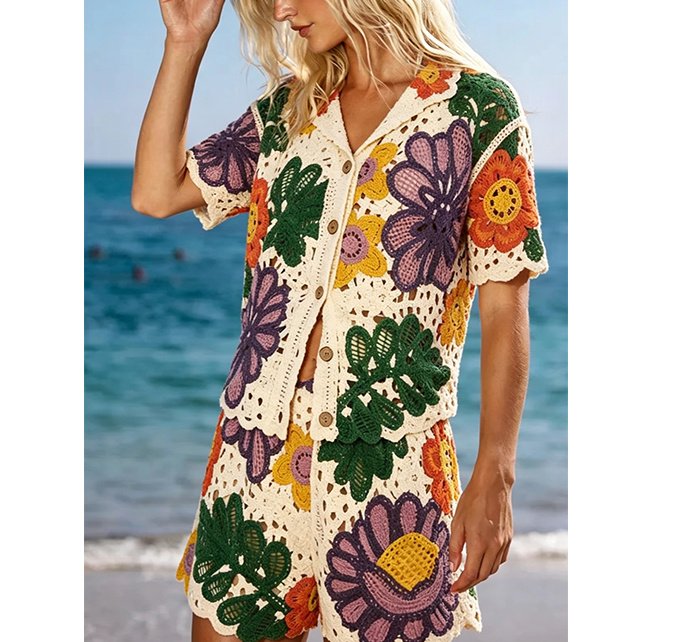
The technical backbone rests on two disciplines.Computer embroideryis used to build guipure-style motifs, scalloped borders, appliqués and dense open-work fields with tight repeatability across bulk.Imitation crochetknitting reproduces the loop structure and irregular hand-feel of hand-crocheted garments, without the productivity ceiling of manual work. Combined, they cover the full spectrum from small trims to full cut-out dresses and co-ord sets. Buyers can explore the current output on thecrochet and lace apparel product page.
On the commercial side, the factory operates as a one-stopOEM and ODM service partner. That covers tech-pack interpretation, pattern engineering, fabric and trim development, sampling, bulk production, in-line QC and packaging. Vertical brand owners who do not have a technical crochet specialist in-house can lean on the factory team to reinterpret a mood board or hand sample into a production-ready style. More on the company background is available on theAboutpage.
Practical Sourcing Checklist for a Crochet Lace Program
The following checklist helps buyers move a crochet lace program from concept to delivered goods with fewer surprises. It is written for teams working across time zones with a Chinese supplier base.
Development and sampling
– Provide a clear reference: hand sample, competitor garment or high-resolution image with motif dimensions.
– Approve yarn count, base fabric and lab dips before proto stitching begins.
– Request a stitch-out or knit swatch before a full garment sample, especially for cut-out placements.
– Confirm care instructions early, since crochet and open-work fabrics have specific washing and pressing requirements.
– Agree AQL levels for critical, major and minor defects, with specific tolerance for skipped stitches, motif alignment and open-work symmetry.
– Define acceptable shading between panels of the same garment and between garments in the same size run.
– Book in-line inspection at 20 to 30 percent output, not only final random inspection.
– Confirm needle detection and metal-free packing where retailer protocols require it.
Packaging and logistics
– Use tissue paper or poly liners to protect delicate open work from snagging during transit.
– Fold along stitched motifs rather than through them where possible.
– Confirm hangtag, care label and country-of-origin labeling against destination market rules.
Lead time and reorder planning
– Plan 60 to 90 days from PO to shipment for new development, and 30 to 45 days for repeats when yarn is in stock.
– Nominate one or two “core carry-over” crochet styles per season so the factory can pre-book yarn and machine time.
– Discuss min reorder quantities up front, since crochet knit programs typically favor lower MOQs than fully cut-and-sew woven programs.
Building a Repeatable Crochet Lace Program
Crochet lace is no longer a trend to chase season by season. For vertical brand owners in the US and European markets, it is becoming a permanent product pillar that rewards suppliers who can hold quality, compliance and delivery at the same time. The winning formula is not to romanticize hand work or to over-industrialize it, but to combine machine precision with a craft aesthetic, backed by an audited factory and a service team that can carry a program from sketch to reorder.
If you are scoping a new crochet lace capsule, refreshing an