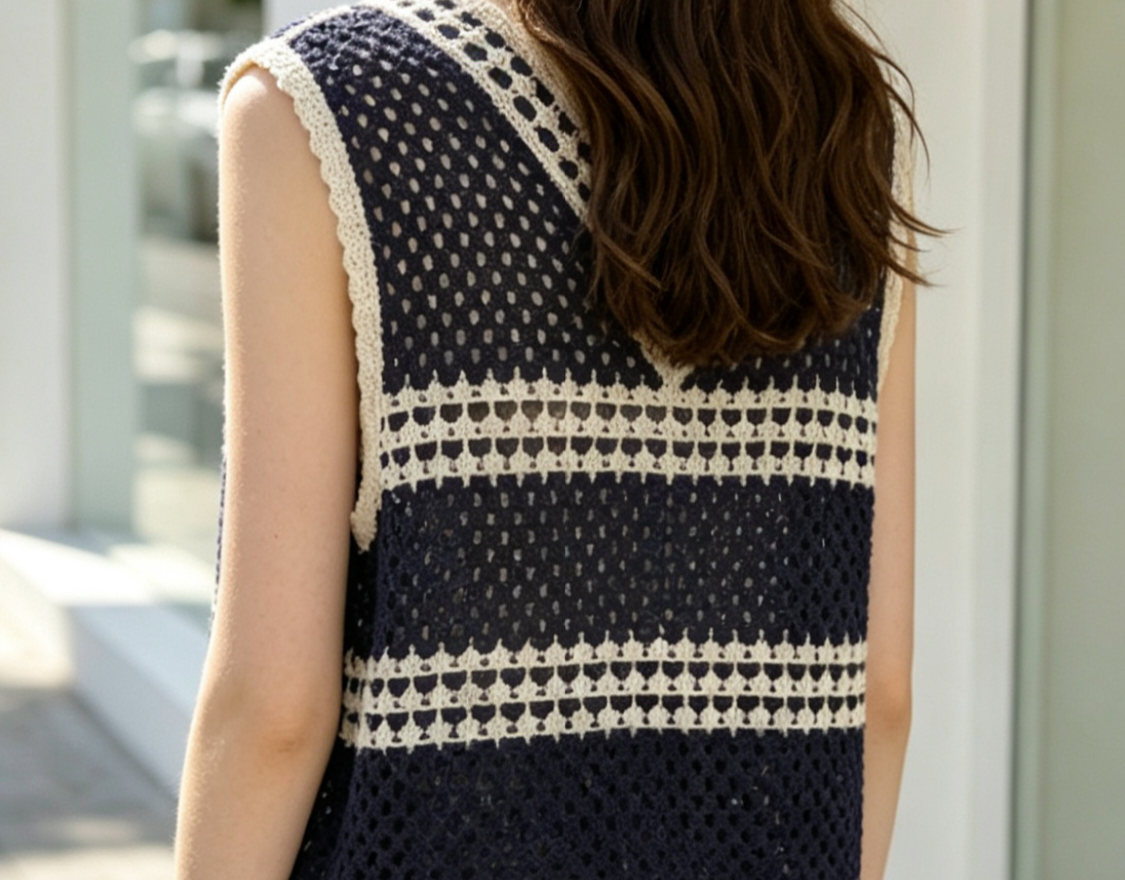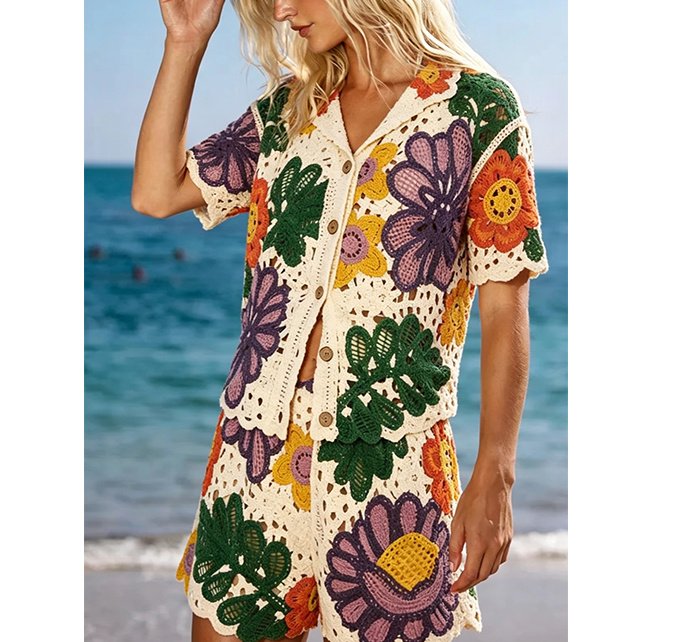
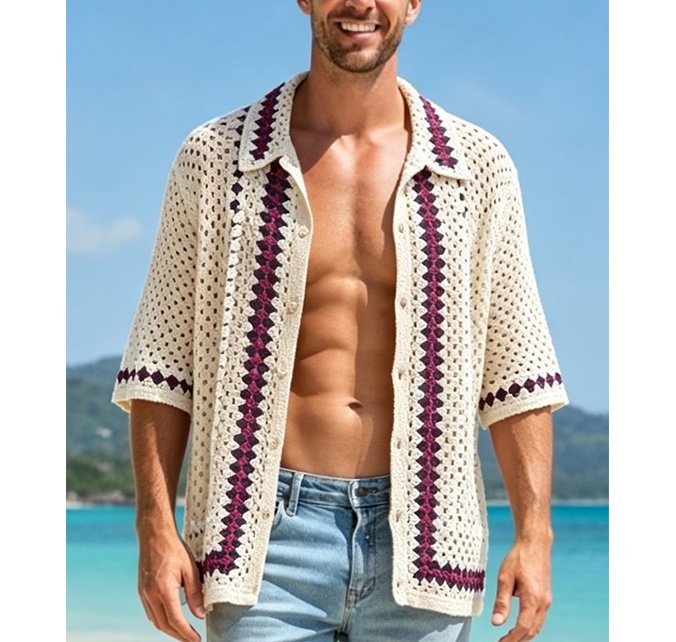
Crochet clothes dominated buyer inquiry lists at both the Canton Fair and MAGIC Show this season. Across hundreds of supplier booths, three categories consistently drew the longest queues:crochet cover-ups and beachwear,layering tops with mixed-material construction, andcrochet-trim dresses with clean, commercial silhouettes. Buyers from North America, Europe, and emerging e-commerce markets repeatedly asked the same questions: Can you scale this without losing the handmade look? What is your minimum order quantity for custom colorways? Do you hold BSCI or equivalent certifications?
For brands and cross-border sellers evaluatingcrochet garmentsuppliers, this review distills the technical and commercial patterns we observed firsthand, alongside the production criteria that separate sample-stage factories from reliable, audit-ready manufacturing partners.
Why Crochet Clothes Matter for Your Product Line in 2025
The resurgence of crochet is not a fleeting trend—it reflects a structural shift in consumer demand toward texture, craft storytelling, and perceived value. Retailers reported that crochet pieces carry higher average unit retail prices and stronger sell-through rates compared to basic knit or woven tops in the same category. For e-commerce sellers, crochet garments photograph well, perform strongly in social commerce channels, and justify premium positioning without requiring luxury-tier fabric costs.
However,crochet clothespresent a sourcing paradox. Authentic handmade crochet is slow, inconsistent, and expensive at scale. Pure machine knit lacks the dimensional texture and artisan aesthetic that drives the category's appeal. The factories earning serious buyer attention at both trade shows were those demonstratingcomputer embroidery and imitation crochet techniques—industrial methods capable of replicating handcraft detail at commercial speed and cost.
Buyers we spoke with prioritized three factors: visual authenticity of the crochet effect, production lead time predictability, and compliance documentation for major retail and marketplace requirements. Factories that could not provide recent BSCI, WRAP, or customer audit records saw significantly lower conversion from inquiry to sample order.
Technical and Sourcing Criteria Buyers Should Evaluate
When assessing acrochet garmentsupplier, move beyond the showroom sample. Request detail on the following production and compliance dimensions:
Production Method and Equipment
Ask whether the factory uses manual crochet, machine knit with crochet-style programming, or computer-controlled embroidery with imitation crochet capability. The latter two methods offer the best balance of craft aesthetic and scalability. Factories withdedicated computer embroidery machines(typically 60+ heads for serious export volumes) can execute complex openwork, floral motifs, and dimensional stitching that manual methods cannot sustain across thousands of units.
Material Flexibility and Yarn Sourcing
Crochet garments require yarn with specific twist, thickness, and elasticity profiles. Verify that the supplier maintains relationships with multiple yarn mills and can accommodate custom compositions—cotton-blend, viscose, linen-look synthetics—without forcing you into their stock colorways. Lead time for yarn procurement often determines your overall production calendar.
Compliance and Audit Readiness
Major retailers and marketplaces now enforce stricter social compliance and product safety standards. Factories holdingBSCI certification, Walmart factory audit approval, or equivalent third-party credentials reduce your compliance risk and accelerate onboarding with large buyers. Request copies of current certificates and confirm the scope covers the specific production facility you will use, not a separate showroom entity.
Minimum Order Quantities and Customization Terms
Exhibition booths often quote attractive per-unit pricing, but the MOQ and customization fees determine your real cost structure. Forcrochet clothes, MOQs typically range from 300 to 1,000 pieces per style per colorway, depending on the complexity of the pattern and whether you require custom yarn development. Clarify whether design revisions, colorway additions, and packaging customization incur separate setup fees.
Quality Control Process and Defect Tolerance
Crochet and openwork construction are prone to yarn breakage, tension inconsistencies, and pattern misalignment if production oversight is weak. Ask for the factory's QC checkpoints—incoming yarn inspection, in-line production checks, pre-shipment final inspection—and request sample defect rate data from recent export orders. Factories that cannot provide this data likely lack mature quality systems.
How Eaoy Fashion Solves the Crochet Production Challenge
Eaoy Fashionoperates a 9,000-square-meter production facility in Haiyang, Shandong Province, equipped with over 60 computer embroidery and imitation crochet machines. The factory specializes in translating traditional handcraft aesthetics intoscalable, audit-compliant OEM and ODM productionfor international apparel brands, retail chains, and cross-border e-commerce sellers.
Computer Embroidery and Imitation Crochet Capability
Eaoy Fashion's core technical advantage lies in itscomputer embroidery and imitation crochet systems, which replicate the dimensional texture, openwork patterns, and irregular stitch variation of handmade crochet at industrial speed. This approach delivers the craft aesthetic buyers want, with the consistency and throughput commercial orders require. Daily production capacity reaches 5,000 finished garments, enabling the factory to absorb both large-scale retail programs and fast-turn reorders for e-commerce sellers.
BSCI and Walmart Audit Compliance
The facility holds currentBSCI certification (valid through 2025–2026)and has successfully completedWalmart factory audits, addressing the compliance requirements of major North American and European retail buyers. For cross-border sellers expanding into Amazon, Target, or independent retail partnerships, this compliance foundation reduces onboarding friction and mitigates supply chain risk.
End-to-End OEM and ODM Service
Beyond cut-and-sew production, Eaoy Fashion providesfull product customization services: technical sketch development, yarn and fabric sourcing, pattern engineering, sample iteration, and bulk manufacturing. This integrated model allows buyers to enter with a design concept or reference image and receive production-ready samples without coordinating across multiple subcontractors. Theservices offeredcover women's apparel, men's styles, children's garments, and accessories, all utilizing the same crochet and embroidery techniques.
Category Expansion Beyond Apparel
Eaoy Fashion applies its crochet and lace techniques acrossbags, accessories, and home textiles, enabling buyers to build cohesive product collections with a single supplier relationship. This category breadth is particularly valuable for e-commerce brands developing seasonal capsules or private-label assortments that require visual and technical consistency across multiple SKUs.
Explore the currentproduct rangeto evaluate style versatility and construction quality.
Practical Checklist for Sourcing, QC, Packaging, and Reorder Planning
Use this checklist to structure your supplier evaluation and production workflow when sourcingcrochet garmentorders:
Pre-Order Due Diligence
– Request and verify current compliance certificates (BSCI, customer audits, product safety test reports).
– Review at least three production samples in different colorways to assess yarn consistency and stitch quality.
– Clarify total lead time: yarn procurement, sampling, bulk production, and shipping. Budget 60–90 days for initial orders.
– Confirm MOQ per style, per color, and ask whether mixed-color assortments within a single style reduce per-unit cost.
– Negotiate payment terms and understand deposit, progress payment, and balance-due milestones.
Production and Quality Control
– Request a pre-production sample (PP sample) after bulk yarn and trims are secured, and approve it before cutting begins.
– Specify your quality standard: acceptable defect rate, critical versus minor defects, and inspection protocol (AQL 2.5 or custom).
– If possible, arrange third-party inspection or request detailed photo reports at the pre-shipment stage.
– For first-time suppliers, consider a smaller trial order to validate quality and communication before committing to a full seasonal buy.
Packaging and Labeling
– Provide all hangtag artwork, care label content, and size label specifications early in the sampling phase. Late changes often incur rush fees.
– Confirm inner polybag material (recycled content if required by your market), outer carton labeling, and any retail-compliance packaging (e.g., Amazon FNSKU labels, retailer-specific carton marks).
– Request carton dimensions and